



Is It Easy to Replace the ABB Robotics 3HNA027421-001 Module?
In high-throughput manufacturing environments, industrial robots are the workhorses that keep production moving. However, even the most durable components eventually experience wear and tear due to continuous, high-speed multi-axis movements. Among these components, the robotic wrist is subjected to the highest mechanical stress. If your facility utilizes robots for painting, welding, or high-precision assembly, maintaining the wrist integrity is paramount.
When a wrist component begins to show signs of degradation, plant managers face a critical question: how complex is the replacement process? Specifically, is it easy to replace the ABB 3HNA027421-001 module? In this comprehensive technical guide, we will break down when to service this specialized robotic hollow wrist module the step-by-step replacement workflow, and best practices to ensure a seamless transition that minimizes costly factory downtime.
Identifying When Your Hollow Wrist Module Requires Service
A reactive approach to maintenance—waiting for a component to completely fail mid-shift—is one of the most expensive mistakes a factory can make. To transition to a predictive strategy, maintenance teams must recognize the early warning signs that an ABB 3HNA027421-001 unit requires attention.
During routine inspections, technicians should watch for the following indicators:
● Degraded Sealing Performance: For robots operating in paint booths or dusty assembly environments, check the exterior joints for signs of paint mist ingress or grease leakage. If the internal chamber is exposed to external elements, the internal gears are at immediate risk.
● Intermittent Signal Loss: Since this is a hollow wrist design, electrical control wires and fluid lines pass through the center. If sensors begin reporting intermittent communication dropouts, it often indicates that the internal cables are rubbing against a worn internal guide.
● Audible Noise and Backlash: Unusual grinding, clicking, or increased mechanical play (backlash) during axis 5 and axis 6 rotations points directly to mechanical wear within the wrist gear train.
If any of these symptoms occur, scheduling a prompt replacement during the next planned maintenance window is highly recommended.
Step-by-Step Guide to Replacing the ABB 3HNA027421-001
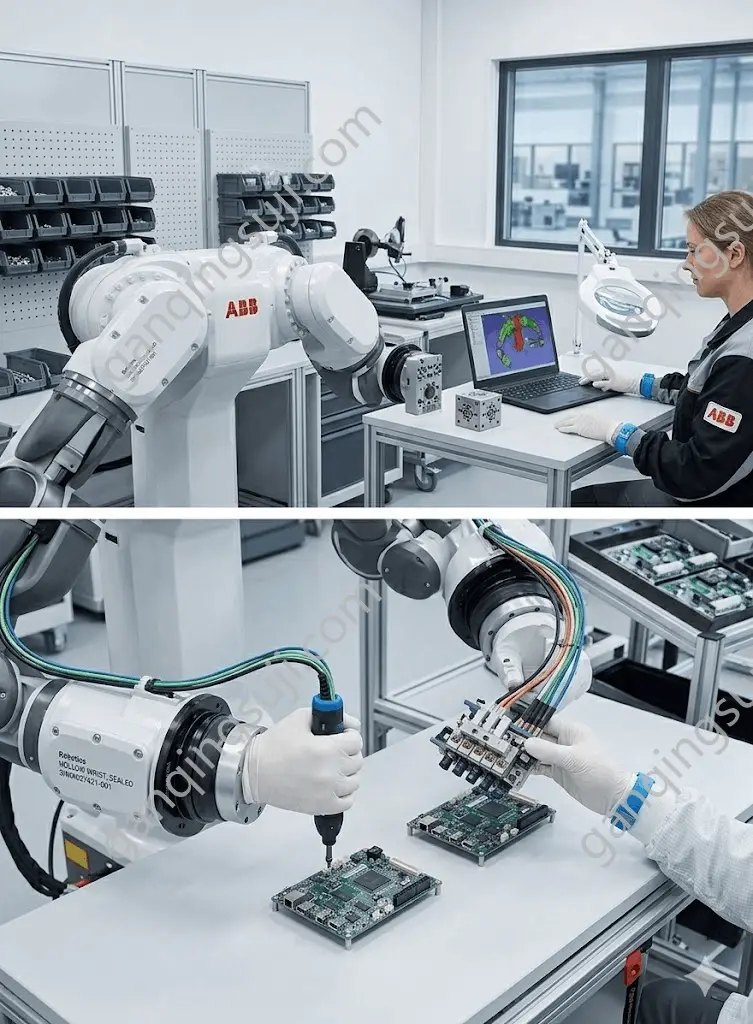
While replacing a sealed hollow wrist module requires technical precision, the modular design of ABB hardware simplifies the process significantly compared to older, non-hollow generations. Below is the standard industrial workflow for executing a successful swap.
Step 1: Safety Isolation and Calibration Prep
Safety is the absolute priority in ABB robotics maintenance Before touching the hardware, jog the robot into its designated service position where the arm is fully supported. Lock out and tag out (LOTO) all electrical power sources, pneumatic lines, and fluid delivery systems. Crucially, record the current axis calibration offsets in the robot controller software to streamline the post-replacement synchronization.
Step 2: Extracting the Internal Cable Bundle
The defining characteristic of a hollow wrist is its internal routing cavity. To remove the old wrist, you must first clear the internal path:
1. Open the access panels on the arm housing adjacent to the wrist.
2. Carefully disconnect the electrical quick-connectors and fluid couplings.
3. Gently pull the cable and hose bundle backward out of the industrial robot cable routing path. Take care not to bend or scratch the specialized high-flex cables.
Step 3: Mechanical Detachment of the Module
With the internal cavity cleared, the mechanical unbolting can begin. Using a calibrated torque wrench, remove the retaining bolts securing the old 3HNA027421-001 module to the robot arm's fore-axis. Carefully slide the worn wrist module off its alignment pins. Clean the mounting surface thoroughly using an approved solvent to remove old grease, debris, or cured paint particulates.
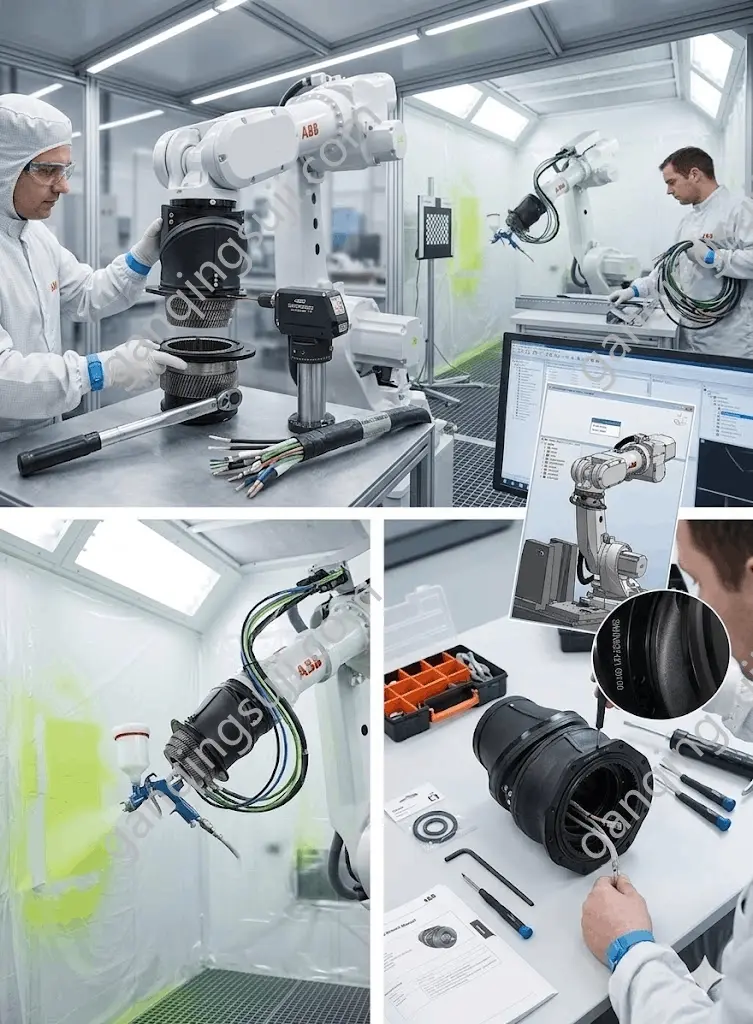
Step 4: Installing the New Sealed Module
Inspect the new replacement wrist to ensure its integrated seals are flawless and properly lubricated. Align the new module with the guide pins on the robot arm. Hand-tighten the mounting bolts in a cross-pattern sequence to ensure even seating. Finally, use a torque wrench to tighten all fasteners strictly to the exact Newton-meter (Nm) specifications outlined in the technical manual.
Step 5: Re-routing and System Calibration
Feed the cable bundle back through the center of the new hollow core. Reconnect all electrical harnesses and fluid lines, checking that the integrated strain-relief clamps are securely fastened. Once the mechanical assembly is locked down, restore power, clear any emergency stop codes, and perform a fine calibration sequence for axes 5 and 6. Run the robot through a slow-speed test program to verify that the internal bundle moves smoothly without any internal catching or stretching.
Pro-Tips to Extend the Lifespan of Your New Module
Is the replacement easy? Yes, provided your team follows the correct engineering protocols. However, the best way to save time on maintenance is to maximize the operating lifespan of the newly installed hardware.
To achieve this, implement these three expert strategies:
1. Optimize Cable Tension
When threading the lines through the industrial robot cable routing core, avoid pulling the cables completely taut. Leaving a precisely calculated amount of "slack" inside the bending zones allows the internal lines to twist naturally on their own longitudinal axis, drastically lowering mechanical friction.
2. Never Skip Torque Specifications
The ABB 3HNA027421-001 relies heavily on uniform pressure across its mating surfaces to maintain its sealed rating. Over-tightening fasteners can distort the internal bearings, while under-tightening allows vibrations to create gaps in the seal, letting damaging overspray or moisture seep inside.
3. Maintain regular Seal Inspection Cycles
In highly aggressive environments—such as automated paint kitchens or arc welding cells—incorporate a brief weekly visual inspection of the wrist joints into your standard ABB robotics maintenance protocols. Catching a minor exterior seal tear early allows you to replace a simple gasket rather than the entire mechanical wrist assembly.
Conclusion: Balancing Modular Simplicity with Technical Precision
So, is it easy to replace the ABB 3HNA027421-001 module? The answer is a definitive yes for qualified industrial maintenance technicians. Thanks to ABB’s advanced modular engineering, what used to be a grueling, full-day overhaul is now a predictable, highly manageable procedure that can be accomplished cleanly within a standard maintenance shift.
By understanding the step-by-step requirements of internal cable extraction, precise mechanical unbolting, and correct torque re-assembly, facilities can confidently manage their own hardware lifecycles. Keeping premium, factory-sealed robotic hollow wrist module replacements stocked in your spare parts inventory ensures that when the time comes for a swap, your production line can pivot quickly, protect its internal wiring, and maintain peak operational efficiency for years to come.