



Why Is Your Fleet Losing Hydraulic Pressure? The Definitive Guide to the Allison Transmission 3-Gear Pump 29510665
Are you experiencing unexplained transmission slippage, overheating, or sluggish gear shifts in your heavy-duty commercial vehicles? If so, your vehicle’s internal fluid pressure is likely compromised, and replacing your worn assembly with a genuine Allison Transmission 3-Gear Pump is the most effective way to restore optimal powertrain efficiency. In modern fleet management, maintaining consistent line pressure is not just a matter of performance—it is the thin line between seamless daily operations and extremely expensive unscheduled downtime.
When heavy equipment operates under continuous high-load cycles, the hydraulic pump serves as the primary heart of the entire transmission system. If this vital component fails to deliver precise fluid volumetric flow, the friction clutches within the automatic transmission cannot engage properly. For international fleet operators, logistics companies, and maintenance engineers, the Allison pump 29510665 has established itself as the global industry benchmark for fluid displacement reliability across a diverse range of demanding vocational applications.
How Does the 3-Gear Architecture Supercharge Heavy-Duty Reliability?
To understand why this specific pump outperforms alternative aftermarket solutions, we must examine its internal mechanical design. Traditional hydraulic pumps often utilize a standard two-gear configuration. While a two-gear system is adequate for light-duty passenger vehicles, it frequently struggles under the extreme thermal and mechanical stresses encountered in commercial trucking. Under heavy loads, two-gear designs experience asymmetric hydrodynamic forces, which accelerate bearing wear and lead to internal fluid leakage.
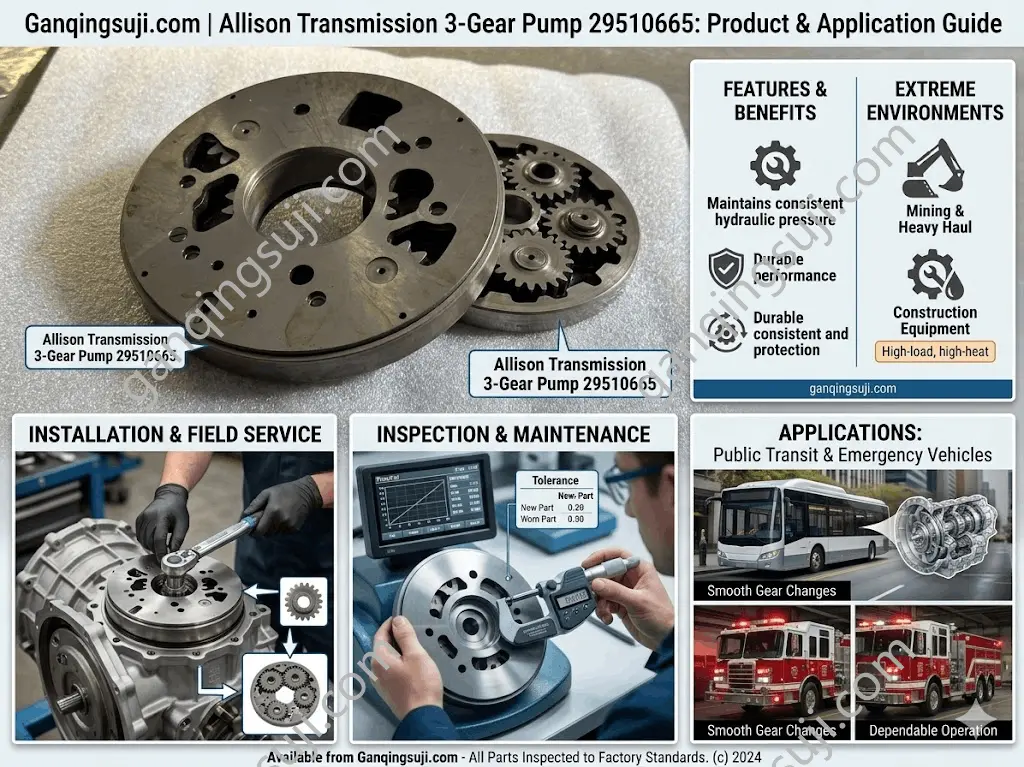
The advanced three-gear architecture engineered into the 29510665 model solves this engineering vulnerability completely. By utilizing a central driving gear paired with two synchronized driven gears, the internal hydraulic forces are perfectly balanced across the pump casing. This unique design configuration splits the fluid delivery path, effectively minimizing radial loads on the pump shafts and journals. As a result, the pump maintains an incredibly tight volumetric clearance even when transmission fluid temperatures spike during extended operation. For fleet managers, this technical advantage translates into consistent line pressure, faster torque converter lock-up response, and a significantly extended operational lifespan for the entire transmission.
Can the Allison 29510665 Pump Survive the World’s Harshest Industries?
The short answer is yes—if it is an original OEM-spec component. Different vocational environments present unique challenges to a powertrain, but the 29510665 model is built to withstand them all.
1. Mining & Heavy Haulage Environments
No operating environment tests the limits of metallurgy quite like an open-pit mine or a heavy infrastructure site. A typical mining fleet hydraulic pump must run continuously in airborne abrasive dust, extreme ambient temperatures, and violent mechanical vibrations. Articulated dump trucks and heavy loaders carry immense uphill payloads, forcing the transmission to manage maximum torque at low speeds. The precision-ground gear profiles within the 29510665 model are highly resistant to micro-pitting and internal cavitation, preventing hydraulic lag and ensuring seamless gear transitions under maximum GVW (Gross Vehicle Weight).
2. Commercial Trucking & Logistics Networks
For regional haulers and vocational fleet operators, the focus shifts toward minimizing the Total Cost of Ownership (TCO) and maximizing fuel economy. High-performance commercial trucking hydraulic parts directly influence fuel efficiency. When a pump loses volumetric efficiency due to internal wear, the engine must spend more horsepower simply turning the pump to achieve required shifting pressures. By upgrading to a premium 29510665 gear pump, logistics providers can eliminate internal fluid recirculation, routing more raw power directly to the drive axles and reducing fleet-wide fuel burn.
3. Public Transit & City Buses
Urban transit buses operate in an aggressive, endless stop-and-go cycle for up to twenty hours a day. This constant low-speed shifting creates intense fluid shearing and rapid heat buildup. Installing the 29510665 pump dampens sudden pressure spikes during low-speed gear engagements. This eliminates the harsh shifting jerks that uncomfortable passengers complain about, while simultaneously protecting the internal clutch packs from premature burning.
4. Emergency & Rescue Vehicles
For fire trucks and heavy rescue units, equipment dependability is a matter of public safety. These vehicles sit idle for periods but must deploy at full-throttle instantly upon ignition. The specialized low-friction seals and quick-priming gear geometry of this pump ensure immediate hydraulic pressure build-up from a cold start, ensuring the vehicle performs flawlessly when every second matters.
What Are the Best Practices for Installation, Calibration, and Testing?
Replacing a high-precision transmission pump requires strict adherence to technical protocols. Even the highest-quality component can suffer premature failure if installation mistakes are made during the rebuild process.
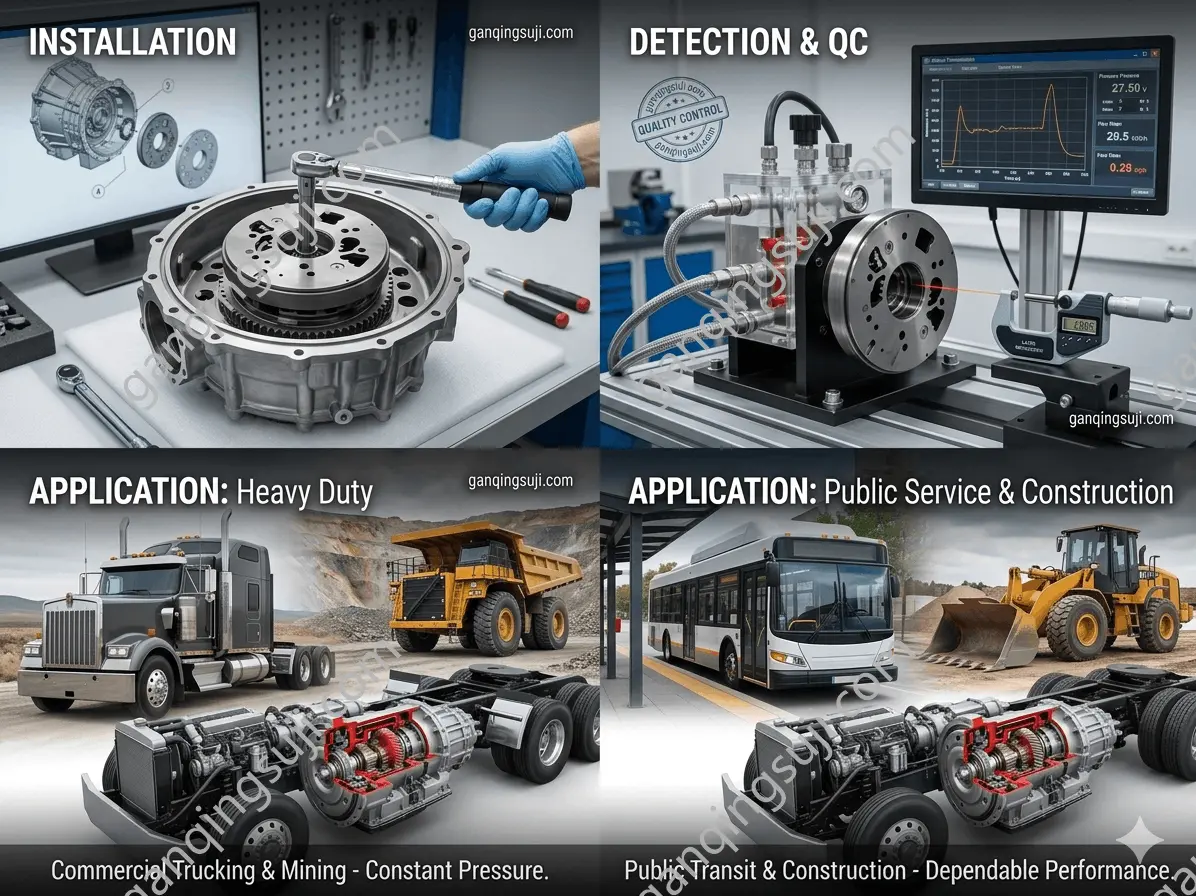
When your service technicians manage a pump replacement cycle, ensure they follow these four mandatory technical steps:
1. Execute a Full Hydraulic System Flush
Never bolt a new pump onto a contaminated transmission. If the previous pump suffered a mechanical breakdown, it likely left microscopic metallic debris inside the torque converter, fluid cooler lines, and valve body. If you do not completely flush the system and replace the transmission fluid, these residual metal particles will flow straight into the new pump, scoring the precision-machined gear faces and ruining the unit within its first few hours of service.
2. Verify Exact Housing Torque Specifications
When mounting the pump assembly to the main transmission housing, technicians must use a calibrated torque wrench and follow the OEM cross-pattern tightening sequence. Uneven torque on the mounting bolts can warp the specialized aluminum or cast-iron pump housing by just a few microns. This slight distortion is enough to cause internal gear binding or localized friction hot-spots, accelerating mechanical wear.
3. Inspect and Replace All Mating Seals
Always use brand-new, heavy-duty Viton O-rings and input shaft seals during assembly. Reusing old, compressed seals will result in external fluid leaks or, worse, internal pressure bleeding between high-pressure and low-pressure fluid passages.
4. Conduct a Post-Installation Baseline Diagnostic Test
Once assembly is complete, connect a digital diagnostic tool to the transmission’s pressure testing ports. Run the vehicle through its thermal warm-up cycle and record hydraulic line pressures at idle, mid-range RPM, and stall speed. Compare these real-world metrics against Allison’s official factory specifications to verify that the internal clearance and pressure regulation systems are performing perfectly.
Where Should You Source Authentic Powertrain Parts Globally?
Sourcing reliable heavy-duty components can be a major challenge in today's fragmented global supply chain. Substandard counterfeit parts often look identical on the outside but use inferior metallurgy that fails prematurely under real-world stress.
At ganqingsuji.com, we specialize in providing factory-tested, high-reliability powertrain solutions tailored specifically for international fleet operators and heavy machinery distributors. We understand that every hour your truck or loader sits idle represents lost revenue, which is why we maintain a robust inventory of critical transmission units ready for immediate worldwide dispatch. Contact our expert technical support team today at ganqingsuji.com to receive an instant product quotation, verify model compatibility, or request detailed technical documentation for your upcoming fleet maintenance cycle.